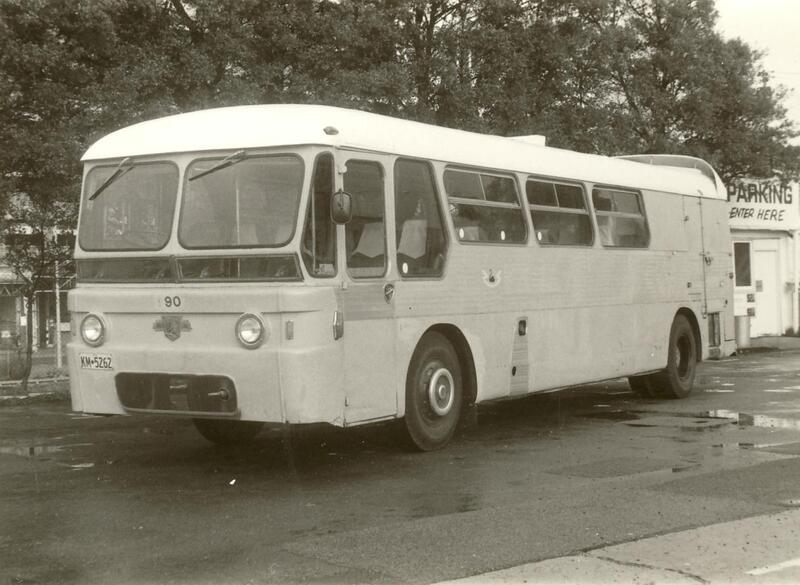
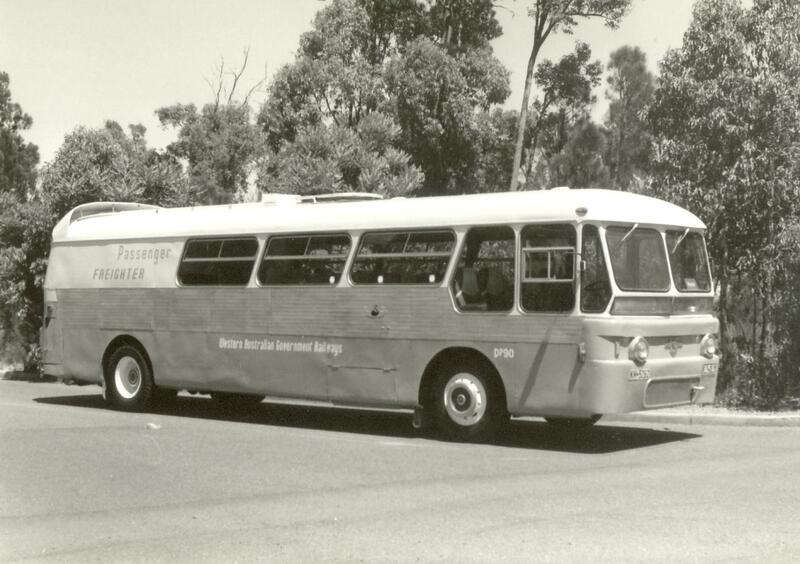
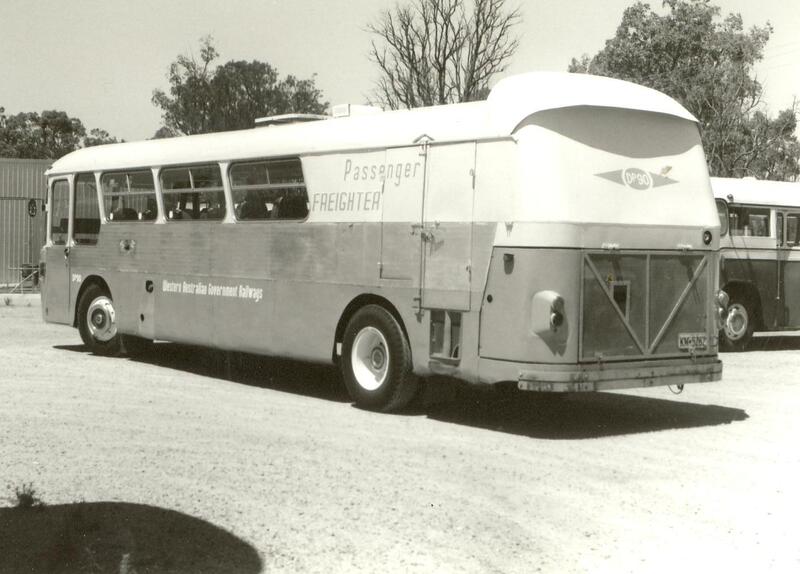
1967 Leyland Lion PSR1/1 (WAGR DP90)
Leyland Lion PSR1/1 — WAGR DP90
The vehicle
| Year | 1967 |
|---|---|
| Make / model | Leyland Lion PSR1/1 |
| Fleet number(s) | WAGR DP90 |
| Manufacturer | Leyland Motors Ltd, Lancashire, England, UK |
| Model/number | Lion PSR1/1 |
| Engine | Leyland O.600, 9.8 Litre, 6 Cylinder diesel. Vertically transverse, rear mounted |
| Transmission | 4 speed, semi-automatic (two pedal control), electro-pneumatic operated epicyclic gearbox with fluid flywheel |
| Brakes | Air operated drums |
| Suspension | Semi-elliptical leaf springs with airbag assistance on front suspension |
| Body: Manufacturer | Howard Porter, Western Australia |
| Body: Construction | All steel frame. Aluminium, and fibreglass panelling |
| Body: Seating | 29 (20 as built) |
| Length | 408 inches (34ft, 10.36 metres) |
| Width | 96 inches (8ft, 2.44 metres) |
| Height | (Not recorded) |
| Wheelbase | 240 inches (20ft, 6.09 metres) |
| Unladen weight | (Not recorded) |
| Status | Not recorded in the crawled source — confirm operational/restorable/spares status with BPSWA before publishing. |
The story
The Lion was introduced in 1960 as an 'export only' chassis for Leyland Motors and was essentially an amalgamation of a Worldmaster chassis with the transversely-mounted engine/gearbox power pack from the double deck Atlantean chassis at the back. Designed principally for the American market, the Lion was not a successful model for Leyland with the majority (52) being sold to Tehran. Approximately 20 were sold in Australia with the majority going to the Western Australian Government Railways (WAGR) Road Services.
Between 1964 and 1967 the WAGR took delivery of 15 Leyland Lions and, because of restrictive axle load limit in places at the time, ten (including DP90) had an extremely rare 3-axle layout designed to spread the vehicle weight. Seven of these 3-axle Lions received bodywork with seating provided in the passenger area for only 20 passengers, and a larger rear refrigerated compartment able to carry 3 tons of freight. The three remaining 3-axle Lions were fitted with toilet-equipped coach bodywork with a larger rear luggage compartment and saloon air conditioning powered by a separate Perkins diesel engine. Five 2-axle Lions were also fitted with toilet-equipped coach bodywork and a larger rear luggage compartment but without the Perkins powered air conditioning. Around 1973 the axle weight limits in Western Australia were relaxed slightly and all the 3-axle Lions had the third axle removed. To reduce their axle loads in this form, the full passenger vehicles had the Perkins air conditioning engine removed. The passenger/freighters had the freight compartment shortened and the passenger section enlarged to seat 29 passengers. With the engine located in the separate compartment at the back behind the freight compartment, the passenger/freighter Lion was a quiet-running vehicle and was well regarded by both drivers and passengers alike.
In 1979 DP90 was transferred to the WAGR Civil Engineers Department, painted yellow, renumbered L869 and was used to transport 'track gangers' to various parts of the railway network. It retained all of its interior fittings, but the floor and seats suffered some 'degradation'.
DP90 was donated to the forerunner of the Bus Preservation Society in 1982 which repainted it in the two-tone blue 'Passenger Freighter' livery in 1989. DP90 is one of eight WAGR Road Services / Westrail buses owned by the Society, and is thought to be the only Lion of this model to be preserved in running condition.
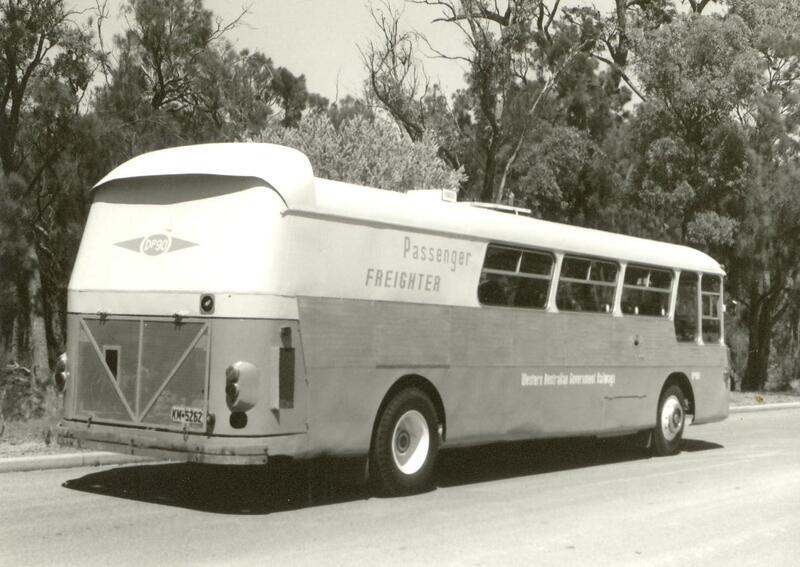
Photos
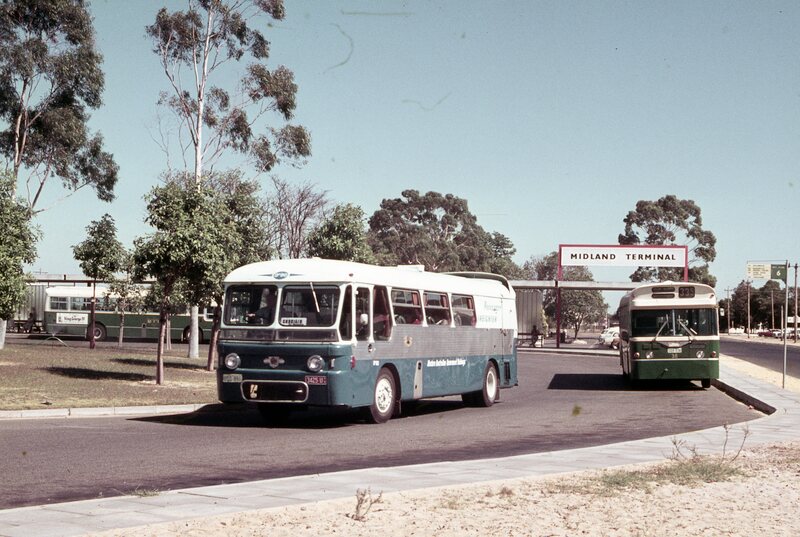
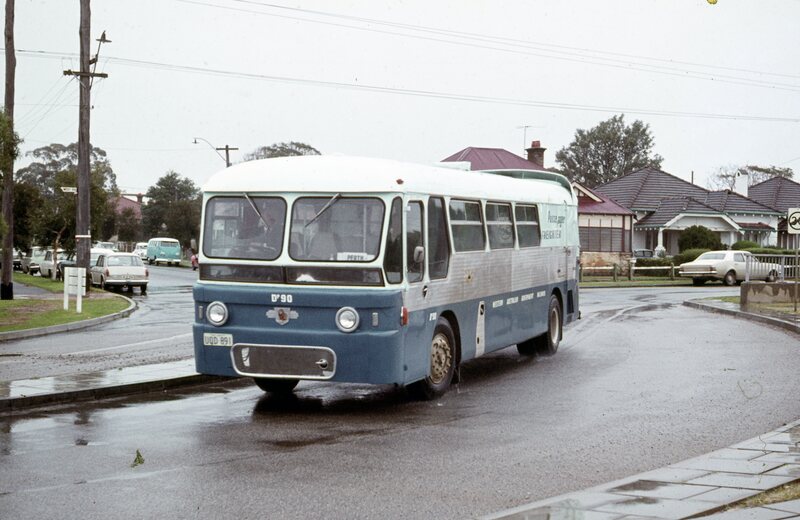
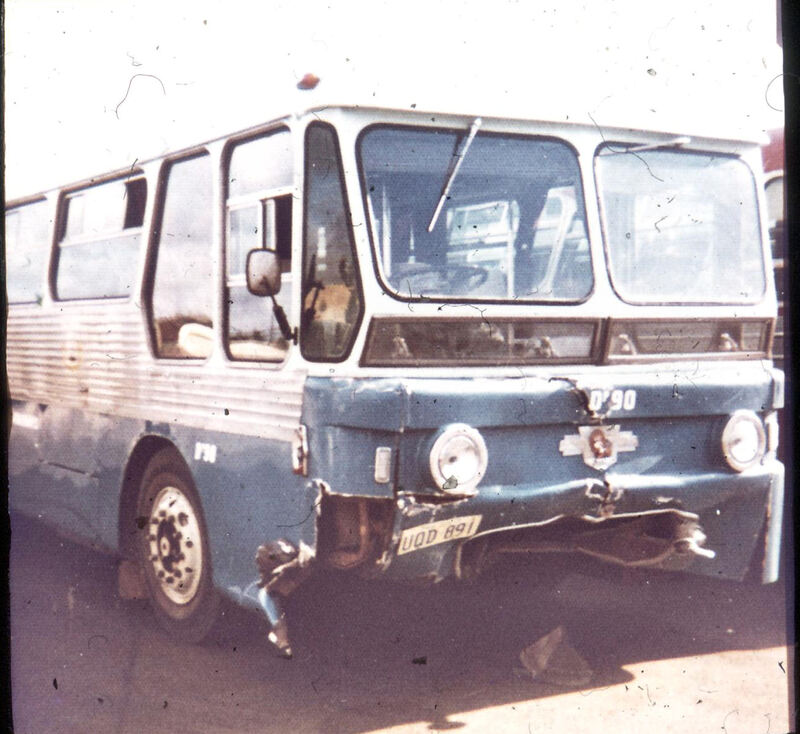
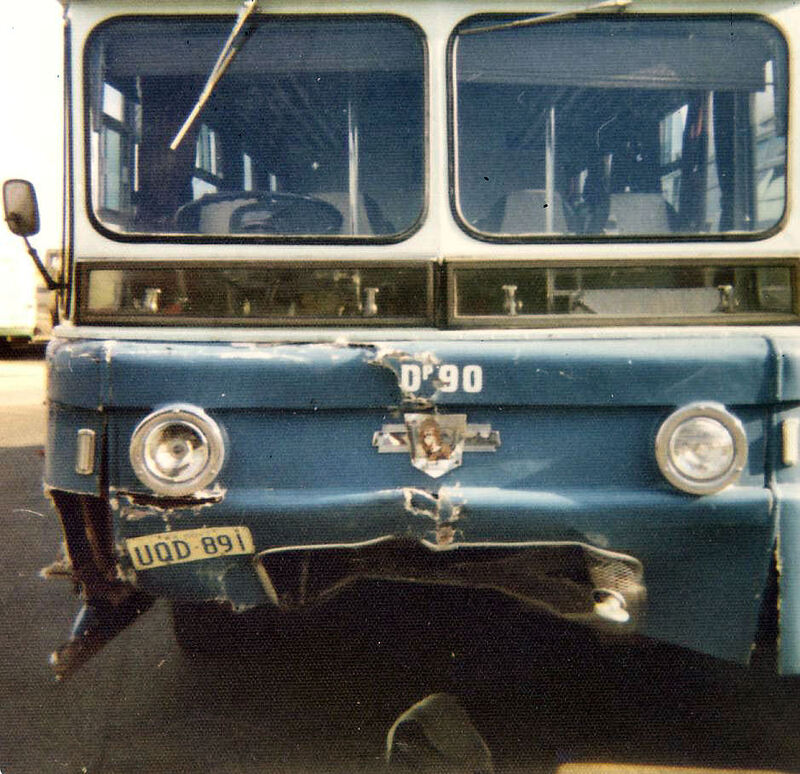
Captions above are auto-derived from the source filenames as a starting point — a volunteer should confirm/replace them with real what/where/year/photographer credits per the Design System's imagery rules.